ReverseMortgagesOttawa.ca covers home renovations for seniors in Ottawa: the changes to stairs, bathrooms and entrances that let you stay in your own home. This page explains why so many Ottawa houses need this work, which tax credits return part of the cost, and how your home’s value can pay for it.
Why many Ottawa homes need changes
A large part of Ottawa’s housing is older. In the 2021 Census, 44.2% of homes in the City of Ottawa were built in 1980 or earlier, and 15.9% were built in 1960 or before. Single-detached houses made up 41.7% of all homes (Statistics Canada, Census Profile 2021).
In many two-storey and split-level houses, the bedrooms and the full bathroom sit up a flight of stairs. That layout is fine at 50. At 80, it can decide whether you can keep living there.
The changes that help most
Stairs
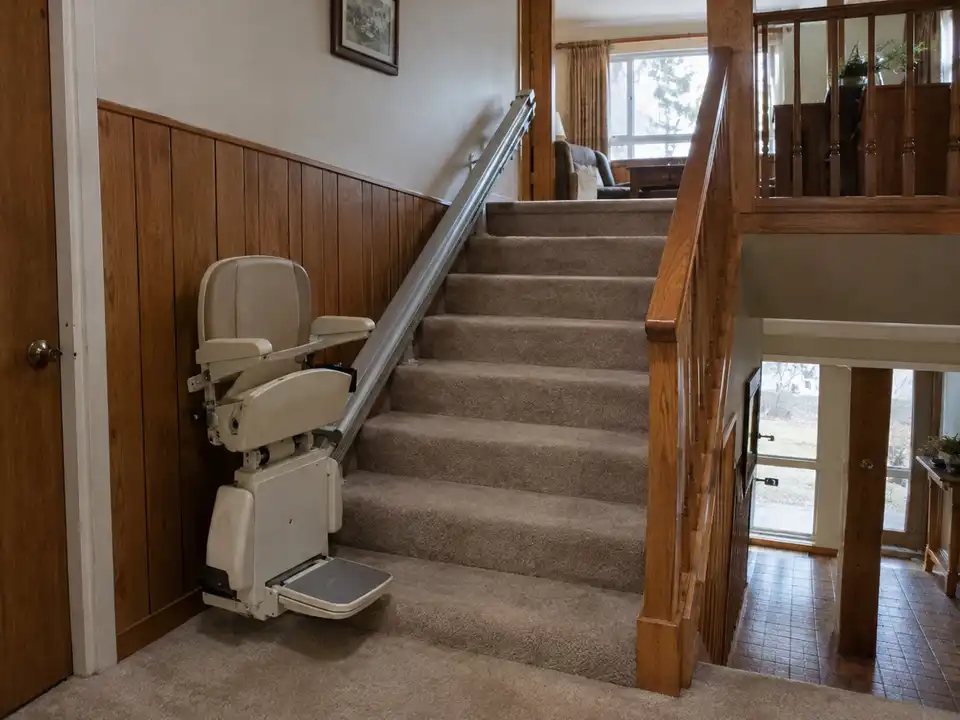
A stair lift carries you up and down on a seat that runs along a rail fixed to the staircase. A split-level home with several short flights may need a curved rail or more than one lift. Moving the bedroom down to the main floor is the other way to make the stairs optional.
Bathrooms
A walk-in tub has a door in its side, so you don’t step over the edge. A low-threshold shower, grab bars and a raised toilet seat are other common changes. Grab bars, grips and rails are named on Ontario’s list of items that count toward its seniors care tax credit.
Entrances
A ramp, a handrail on both sides of the front steps, wider doorways and better outdoor lighting make getting in and out safer, especially through an Ottawa winter.
Main-floor living
Some owners turn a main-floor den into a bedroom and add a bathroom beside it. The stairs then lead only to rooms you can do without.
There is no official price list for these jobs in Ottawa. Get quotes from two or three contractors, and ask whether each item becomes a permanent part of the house, because that matters for the federal credit.
Tax credits that return part of the cost
The federal Home Accessibility Tax Credit
You can claim up to $20,000 of eligible renovation costs a year if you qualify: you are 65 or older by December 31, or you are eligible for the disability tax credit. The work must help you get into the home, move around or function in it, or lower the risk of harm. Items that don’t become a permanent part of the home generally don’t qualify (Canada Revenue Agency, Home accessibility expenses).
For 2026 the credit rate is 14%, so the most it’s worth is $2,800 (Department of Finance Canada). It’s non-refundable, which means it lowers income tax you owe but isn’t paid out on its own.
The Ontario Seniors Care at Home Tax Credit
If you or your spouse turned 70 or older this year, a renovation that improves mobility or access because of a severe and prolonged impairment can count. The credit is 25% of claimable medical expenses up to $6,000, for up to $1,500. It shrinks by 5% of family net income over $35,000 and ends by $65,000 at most (Government of Ontario). Unlike the federal credit, it’s refundable.
Programs that won’t help with your own home
The City’s Ontario Renovates program funds accessibility changes for private landlords’ rental units, not for owners renovating the home they live in (City of Ottawa, Ontario Renovates).
Renovating compared with moving to a bungalow
Moving to a one-storey home is the other way to leave the stairs behind. In September 2026, OREB’s benchmark two-storey house was $759,000 and its benchmark bungalow was $630,100, a gap of $128,900 (OREB, September 2026).
That gap shrinks once the move is paid for. Ontario land transfer tax on a $630,100 purchase is about $9,077 on its own (Government of Ontario, Calculating land transfer tax). Realtor commission, legal fees and movers come on top. The guide to the cost of downsizing in Ottawa adds up a full move.
Paying for renovations with a reverse mortgage
At 55 or older, you can pay for a stair lift, a ramp or a new bathroom by borrowing against your Ottawa home. There are no required monthly mortgage payments. You stay responsible for the property tax, home insurance and upkeep. You keep living in the house, and you still own it.
What an Ottawa home could provide
| Type of home | Benchmark price | At 65 | At 70 | At 75 |
|---|---|---|---|---|
| Bungalow (one-storey house) | $630,100 -0.6% in a year | $319,000 | $333,000 | $364,000 |
| Two-storey house | $759,000 +0.4% in a year | $384,000 | $401,000 | $438,000 |
| Townhouse | $546,500 -2.2% in a year | $276,000 | $289,000 | $316,000 |
| Condo apartment | $380,800 -6.1% in a year | $192,000 | $201,000 | $220,000 |
| Typical Ottawa home (all types) | $623,500 -0.3% in a year | $315,000 | $330,000 | $360,000 |
Benchmark prices for September 2026 from the Ottawa Real Estate Board (MLS® Home Price Index: the price of a typical home of each type). Each amount is the benchmark times the age percentage the main estimate form uses (65: 50.55%, 70: 52.85%, 75: 57.75%), the top end of what the most generous products lend, to the nearest $1,000. The real figure for your home comes from its appraisal.
For example, if you’re 75 and own a two-storey house worth OREB’s $759,000 benchmark, you could get up to about $438,000. Any mortgage still owing is paid off from that amount first. The guide to Ottawa house prices gives the benchmark for every type of home, and you never have to take the full amount.
A lump sum or money in stages
You can take one lump sum before the work starts, or a first advance and then more as each contractor is paid. At some lenders, each extra draw carries a small fee. You pay interest only on the money you’ve drawn.
Your pensions stay the same
Because a reverse mortgage is a loan, the money you receive isn’t taxable. Old Age Security and the Guaranteed Income Supplement are not reduced.
What stays protected
Interest is added to what you owe over time, and growth in the home’s value can offset some or all of it. All four lenders, HomeEquity Bank (CHIP), Equitable Bank, Home Trust and Bloom, offer protection so you never owe more than the home is worth when the mortgage comes due. That protection holds as long as the property taxes, insurance and upkeep are looked after. The guide to what a reverse mortgage costs in Ottawa lists every one-time cost, including the appraisal and your own lawyer.
Help from a broker, from the first question to closing
Before any work starts, Richard Hopkins, Mortgage Broker, compares every reverse mortgage lender in Canada for your plans. The best deal for your home and goals then comes to you by email. A son or daughter can be copied on every message. Help comes by email, phone and video call. There is no charge to you, because the brokerage is paid by your chosen lender once the mortgage funds.
If you also need help in the home while you recover from a fall or an operation, read about paying for home care in Ottawa. If family wants to live close by, see the page on building a coach house in Ottawa.
What Richard handles for you
- Your renovation plans checked against every reverse mortgage lender in Canada
- How much your home could provide, after any mortgage still owing
- A lump sum or staged advances that match your contractor's schedule
- The best deal for your home and renovation goals, by email
- A clear look at renovating compared with selling and moving
- Your family copied on every email, if you wish
- Help by email, phone and video call, with no trips to an office
- A recommendation built around your situation, reverse mortgage or not
Ottawa guides on this topic
- What does downsizing in Ottawa really cost?
- What does a reverse mortgage cost on an Ottawa home?
- What are Ottawa house prices in 2026, and what could your home provide?
Sources
Figures checked October 16, 2026.
- Statistics Canada, Census Profile 2021, City of Ottawa
- Canada Revenue Agency, Home accessibility expenses (line 31285)
- Department of Finance Canada, Report on the impact of reducing the lowest marginal personal income tax rate on non-refundable tax credits
- Government of Ontario, Ontario Seniors Care at Home Tax Credit
- City of Ottawa, Ontario Renovates program
- Ottawa Real Estate Board, September 2026 market update (published October 5, 2026)
- Government of Ontario, Calculating land transfer tax